
FELA Claims Involving Unsafe Work Conditions: How Railroad Workers Can Prove the Employer Failed to Provide a Safe Workplace
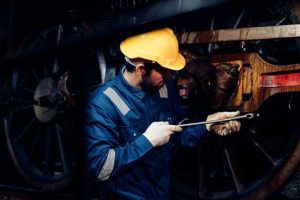 Railroad employees often work around moving equipment, heavy machinery, rail yards, elevated surfaces, tracks, and other conditions where inadequate safety measures can lead to serious injuries. Under FELA, railroad employers have a duty to use reasonable care to provide employees with a reasonably safe workplace, equipment, and methods of performing assigned work.
Proving an unsafe railroad workplace generally requires more than showing that an injury occurred, since evidence must connect the railroad’s conduct or failure to act with the hazardous condition and resulting harm.
Railroad employees who have questions about whether workplace conditions may support a claim can discuss the available evidence with Cahill & Perry, P.C. Attorneys at Law to better understand how federal railroad law may apply.
Safe Railroad Workplace Explained
Federal railroad law does not require an employer to guarantee that every workplace will remain completely free from danger, but it does require reasonable care under the circumstances. Hazards associated with the location, assigned task, equipment, training, staffing, and available safety measures may all affect whether the railroad satisfied that duty.
Supreme Court precedent has long recognized this principle. In a 1943 Supreme Court decision, the Court held that evidence of limited footing, no guardrail, the height of the work location, and the availability of safer work methods was sufficient for a jury to determine whether the railroad failed to use reasonable care in providing a safe place to work. The Court also described the duty as continuing and explained that the level of reasonable care depends in part on the danger associated with the workplace or machinery.
Railroad responsibility may also extend beyond property that the employer owns directly. A 1963 Supreme Court decision addressed the railroad’s duty when an employee worked with equipment belonging to another railroad and recognized the broader principle that an employer may still have a duty to provide a reasonably safe place to work even when employees perform duties on third-party premises.
Potential unsafe working conditions for railroad workers may include:
- defective tools, machinery, walkways, ladders, platforms, or other work equipment;
- insufficient protection from moving trains or maintenance equipment;
- inadequate training or unsafe methods of performing assigned duties; and
- known hazards that supervisors failed to correct after complaints, inspections, or earlier incidents.
Each circumstance requires evidence showing why the condition created an unreasonable risk and what the railroad knew or reasonably should have known before the injury.
What Can Railroad Workers Do to Prove Unsafe Working Conditions?
Evidence gathered near the time of an accident can play an important role in a FELA unsafe workplace claim because physical conditions may change, equipment may be repaired, and employees may later have difficulty recalling specific details. Workers can bolster their claim by collecting:
- Photographs
- Videos
- Measurements
- Witness accounts
- Safety reports
- Work and inspection records
- Training materials
- Written communications
Federal safety requirements can also help establish what protections should have been in place. The Federal Railroad Administration explains that its Roadway Worker Protection rules require railroads to maintain programs protecting employees working on or near tracks from trains and other on-track equipment. Federal rules also require covered employers to provide roadway workers with recurring training on applicable on-track safety procedures, generally once each calendar year.
Proof of railroad employer negligence may become clearer when several forms of evidence point toward the same unresolved hazard. Workers may therefore preserve information concerning prior safety complaints, inspection findings, similar incidents, equipment defects, staffing levels, work instructions, and statements made by supervisors before or immediately after the event.
Prior conduct can help establish foreseeability in appropriate cases. In the 2025 decision Saunders v. Union Pacific Railroad Company, evidence concerning earlier aggressive workplace conduct, written company policies, supervision, training, and failures to report misconduct supported findings related to negligent supervision and training. The court concluded that evidence could support an inference that the railroad failed to take reasonable steps against a foreseeable danger.
Such cases illustrate why FELA claims often depend on what the railroad knew before the injury rather than solely on what happened during the final moments of the accident.
Applying for FELA Claims When Safe Working Conditions Are Not Met
Railroad workers do not simply receive compensation automatically after reporting a workplace injury. Pursuing relief under the Federal Employers’ Liability Act generally requires establishing that railroad negligence played a role in causing the injury, which makes early preservation of evidence especially important.
Workers evaluating a claim may document the location and hazard, identify witnesses, preserve photographs or communications, obtain medical care that accurately records how the injury occurred, and retain copies of available accident or safety reports. Requests for relevant inspection records, training documents, operating rules, maintenance histories, and prior incident information may also become part of the evidence-development process.
Documenting Unsafe Conditions To Establish Whether the Railroad Failed to Meet Its Workplace Safety Duty
Railroad injury claims under FELA often turn on whether the employer knew or reasonably should have known about an unsafe condition and failed to respond with reasonable care. Preserving important information can also reduce disputes about how the workplace appeared before repairs, operational changes, or the passage of time altered important evidence. FELA attorneys in Connecticut can help railroad workers understand what evidence may be relevant to evaluating their rights under federal law.
Schedule a confidential consultation with Cahill & Perry, P.C. Attorneys at Law today.

