
Common Railroad Injuries Covered Under FELA — and How Negligence Is Proven
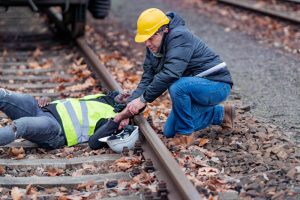 Why do so many railroad injury cases involve the same body parts (back, shoulder, hand, and hearing) year after year?
The answer is that the job stresses the same systems every shift, and preventable safety gaps tend to repeat unless the railroad changes tools, methods, staffing, or maintenance. Under railroad injury law, repetition matters because it helps prove foreseeability and negligence.
If you are weighing whether you have a FELA claim in the Northeast, call 800-654-7245 to discuss timing, evidence, and next steps. The fastest way to understand a FELA claim is to start with the injury type and work backward to the hazard
Common Railroad Injuries Covered Under FELA
FELA claims do not revolve around “one type” of injury. They tend to follow the realities of railroad work: heavy physical demands, constant movement around equipment, uneven walking surfaces, loud environments, and job tasks that repeat for years. Here are the injuries most commonly tied to FELA claims.
Back and Neck Injuries From Lifting, Walking Ballast, and Vibration
Back and neck injuries are common in railroad work because the job combines heavy force, awkward body positions, and unstable footing. Lifting tools, hoses, plates, and components loads the spine, especially when the weight is held away from the body or lifted while twisting. Walking ballast adds constant stress because the surface shifts and forces repeated balance corrections through the ankles, hips, and low back. That extra strain can turn a minor misstep into a sudden disc injury or a significant muscle tear.
Medical diagnoses often include herniated discs, lumbar strains, sciatica, cervical radiculopathy, and flare-ups of degenerative changes that had been manageable before the injury. Vibration can also contribute when equipment transmits repeated shaking into the body, increasing irritation and slowing recovery. These injuries matter because they can restrict bending, climbing, prolonged standing, and lifting, all core demands in many railroad roles. When these limitations appear, a skilled CT railroad injury lawyer usually ties the diagnosis to specific work tasks, the mechanism of injury, and the restrictions that make full duty unrealistic.
Shoulder and Upper-Extremity Injuries From Repetitive Force and Awkward Postures
Shoulder injuries frequently come from repetitive force and poor leverage. Overhead work, forceful pulling, and pushing with the arm extended increase stress on the rotator cuff and surrounding structures. When a tool binds or a component releases suddenly, the shoulder can absorb a sharp load that causes a tear. Common conditions include rotator cuff tears, impingement, bursitis, labral tears, and biceps tendon injuries.
Upper extremity injuries also include elbow and forearm problems from sustained gripping and repetitive twisting. Even without a single dramatic incident, repeated strain can lead to inflammation, weakness, and loss of range of motion. The practical consequences show up quickly. Pain can make it difficult to climb, brace, or handle tools safely. Medical proof often relies on imaging, physical exam findings, therapy notes, and consistent symptom reporting. Work proof usually focuses on task frequency, force required, tool type, and whether the work setup pushed the body into unsafe angles.
Hand, Wrist, and Repetitive-Stress Injuries
Hand and wrist injuries often develop from repeated gripping, pinch force, vibration, and tool use. Over time, those stresses can inflame tendons and compress nerves. Carpal tunnel syndrome, tendinitis, trigger finger, and other repetitive stress conditions are common. Vibration can worsen symptoms by increasing inflammation and reducing the body’s ability to recover between shifts.
These injuries can disrupt both work and daily function because they reduce grip strength, endurance, and fine motor control. Early signs like numbness, tingling, night pain, or dropping objects are sometimes ignored until the condition worsens. That is why the timeline matters. Strong documentation usually includes work history, the type of tools used, how long tasks were performed per shift, and medical records showing progression and treatment. The goal is to show the condition fits the demands of the job, not just the worker’s age or general health.
Slips, Trips, Falls, and Impact Injuries
Falls remain a major source of serious railroad injuries because they can cause multi-body trauma in seconds. A fall from steps, ladders, platforms, or uneven ground can lead to fractures, torn ligaments, knee injuries, shoulder injuries, head injuries, and back injuries. Even when imaging does not show a fracture, soft tissue damage can still create chronic pain and long-term restrictions.
In many cases, the key issues are simple: walking surfaces, drainage, debris, ice, oil, lighting, and the condition of steps and handholds. Falls often become worse when workers are carrying tools or rushing due to operational pressure. Impact injuries also occur when equipment shifts unexpectedly or when workers are struck by tools or materials. Evidence can change fast after an incident, so early photos, witness accounts, and maintenance records often make a major difference in proving what was present and how long it existed.
Amputations and Crush Injuries
Crush injuries and amputations are among the most severe harms in railroad work because they can permanently alter earning capacity and quality of life. These injuries frequently involve pinch points, moving components, coupling areas, and situations where timing and communication are critical. Even when an amputation is avoided, crush injuries can cause complex fractures, severe nerve damage, compartment syndrome, and lasting impairment.
The medical path is often long. Emergency surgery, wound care, rehabilitation, and possible prosthetics can follow, along with chronic pain and reduced function. Long-term issues may include reduced strength, balance limitations, sensitivity, and restricted ability to perform tasks that require climbing, gripping, or prolonged standing. Claim value often turns on permanency, future medical needs, and the realistic impact on work options, not just the initial hospital records.
Hearing Loss From Occupational Noise
Hearing loss claims often arise from long-term exposure to high noise levels during normal operations. Engines, horns, braking systems, and other routine sources can create sustained exposure that gradually damages hearing. Because the change is gradual, many workers do not notice the loss until testing confirms it or communication problems become obvious. Tinnitus is also common and can interfere with sleep and concentration.
Proof typically relies on audiograms over time and whether the pattern matches noise exposure. Work proof focuses on exposure duration, the availability and consistent use of hearing protection, and whether hearing conservation practices were implemented and enforced. Hearing loss matters because it can affect safety, limit certain duties, and create permanent impairment even when the worker feels otherwise capable. A FELA attorney will often connect medical testing to job exposure history and the practical failures that allowed preventable noise damage to continue.
How Negligence Is Proven in a FELA Case
Negligence under FELA is proven by showing two things: the railroad failed to use reasonable care to provide a safe place to work, and that failure contributed to the injury. Proof usually comes from basic, real-world items like safety rules and whether they were followed, maintenance and inspection records, training materials, prior complaints or similar incidents, photos of the scene or equipment, and witness statements.
FELA does not require the railroad to be the only cause. The Supreme Court has said the case can go to a jury if railroad negligence played any part, even a small part, in causing the injury. But it is not an automatic liability. The railroad is not an insurer of safety, so the claim still depends on proving negligence and a causal link.
Choosing the Right Railroad Injury Lawyer in the Northeast
If you were hurt on the railroad, a clear evidence plan can strengthen negligence proof and improve leverage in settlement discussions, so speak with a railroad injury lawyer at Cahill & Perry, P.C. Attorneys at Law and contact us today. Strong cases are built on records, witnesses, and medical support, not guesses, and early action can protect the facts that drive value.

